Turf, Trust, Co-Creation and Impact

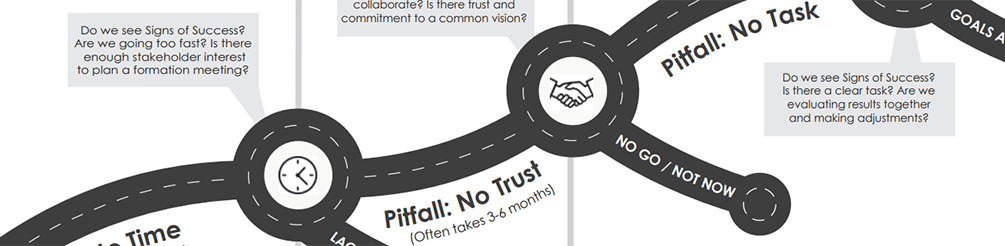
Authentic community change moves at the speed of trust. And yet, we spend so little time and focus on intentionally building trust amongst partners. In this paper, Liz Weaver explores the intricacies of trust, how to build it and what to do when trust is broken in a community or network.

  1. Trust is critical to network and community success.
  2.  We are biologically wired to assess risk and make trust-based decisions.
  3. There are many actions and factors that can build or break trust.
  1. Liz Weaver. Article: Turf, Trust, Co-Creation and Collective Impact. Tamarack Institute. 2017.

Related Articles

The Lausanne Cape Town Commitment on Partnership

Paul teaches us that Christian unity is the creation of God, based on our reconciliation with God and with one another. This double reconciliation has been accomplished through the cross. When we live in unity and work in partnership we demonstrate the supernatural, counter-cultural power of the cross. But when we demonstrate our disunity through failure to partner together, we demean our mission and message, and deny the power of the cross.

The Trinity: A Model for Partnership in Christian Missions

This paper by Enoch Wan and Kevin Penman examines the Holy Trinity as a model for work and relationships in Christian missions today. The paper will begin with an introduction to the doctrine of the Trinity. From there, it will proceed to examine three aspects of the Trinity: the distinct roles of the Three-in-One, how the persons of the Godhead relate to one another, and examples of the One-in-Three working on behalf of mankind. A section on how to apply these truths in the context of Christian missions will be presented. The paper will end with a final conclusion.SOME PRELIMINARY THOUGHTSGod is one! This is the clear cry of the Old Testament. It is found in the Shema, the prayer recited each morning by Jews and taken from Deuteronomy 6:4-6: “Hear, O

Trust & Diversity

Ernie Addicott talks about the underlying foundation of effective ministry collaboration – trusting relationships – and demonstrates it is possible not only to work together across denominational boundaries, but to even build real friendships.